
TL;DR
- $200,000 puts you in the upper tier of Detroit city listings. Most homes that trade inside city limits close for well under that, so you're shopping above the middle of the market rather than at the bottom of it (homes.com).
- The same money buys much less across 8 Mile. In the tri-county market we watch, Oakland County typically prices highest, Macomb sits in the middle, and Wayne County runs lowest — Detroit itself is the cheapest slice of Wayne (topagentrealtymi.com).
- Corktown and Brush Park are out of reach at this budget. Redevelopment around Michigan Central Station repriced those blocks years ago (ownitdetroit.com).
- The famous $1,000 houses are Detroit Land Bank inventory, sold with a rehab agreement and a deadline, not a set of keys.
- On a $200,000 FHA purchase, plan on roughly $12,000 cash at closing: $7,000 down plus about $5,000 in closing costs.
You've seen the listing photos. A brick bungalow with a porch swing at $180,000, and three streets over, a boarded-up twin of the same house for $12,000. Both are real. Both are Detroit. Which one you end up buying depends almost entirely on the block, and Detroit has hundreds of distinct neighborhoods, each with its own price logic (sofi.com).
Table of Contents
- What Does $200,000 Actually Buy in Detroit Right Now?
- Which Neighborhoods Fit a $200K Budget?
- How Long Do Detroit Homes Sit Before Selling?
- What's the Step-by-Step Process to Buy a House in Detroit?
- What Most People Miss When Buying in Detroit
- Are the $1,000 Detroit Houses for Sale Real?
- Frequently asked questions
What Does $200,000 Actually Buy in Detroit Right Now?
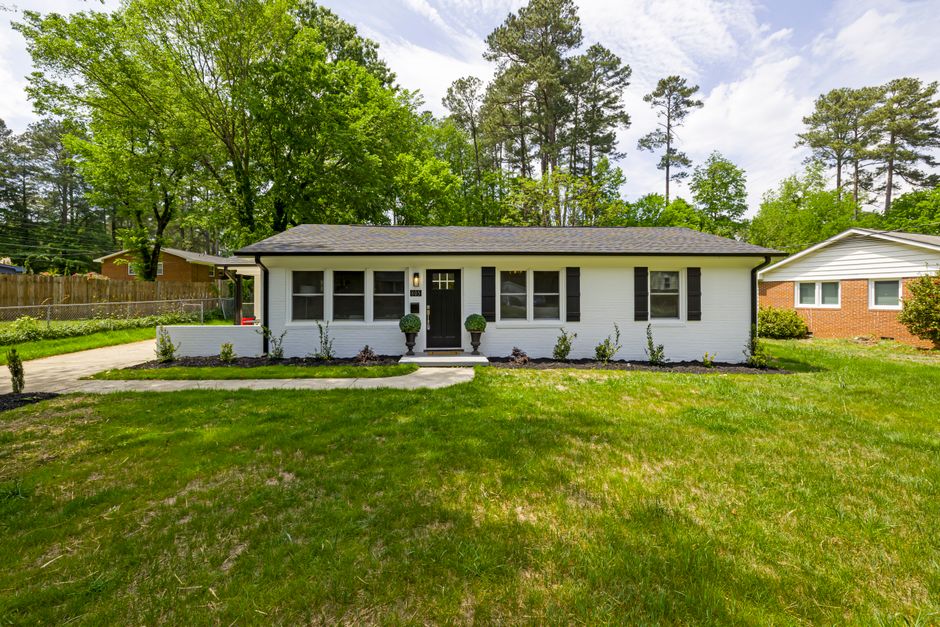
At $200,000, you're generally looking at a fully renovated three-bedroom brick colonial or bungalow in a stable east-side or northwest neighborhood. Alternatively, a solid fixer in a pocket where land values are climbing.
Detroit's housing stock skews heavily pre-1950. Brick bungalows, center-entrance colonials, the occasional Craftsman with original woodwork someone painted over in 1987. At this price you're paying for condition and neighborhood trajectory far more than for square footage. A 1,400-square-foot bungalow with a new roof, updated electrical, and a dry basement will beat a 2,000-square-foot house with knob-and-tube wiring every single time on resale.
Cross into the suburbs and the math changes fast. The same $200,000 that buys a finished home in Grandmont-Rosedale buys a modest condo or a project house in most of Oakland County. That gap is the whole reason people keep looking inside city limits.
Pro tip: Pull the last six months of comparable sales for the exact street, not the ZIP code. Detroit's value swings block to block are more dramatic than anywhere else in the region. We've seen two houses less than a quarter mile apart appraise more than $60,000 apart because one sat across from a vacant lot and the other faced an occupied, maintained block.
Which Neighborhoods Fit a $200K Budget?
East English Village, Grandmont-Rosedale, parts of Bagley, and sections of Jefferson-Chalmers still deliver renovated single-family homes right around the $200,000 mark. These are the neighborhoods with active block clubs, intact housing stock, and enough owner-occupancy that appraisals come in where they should.
What's no longer on the list: Corktown and Brush Park. Brush Park went from boarded-up mansions to a modern urban enclave over roughly a decade, and Corktown repriced hard once the Michigan Central Station restoration got underway (ark7.com, ownitdetroit.com). If someone tells you they're finding cheap houses for sale in either neighborhood, they're quoting numbers from a different decade.
The ranges below reflect what we see moving in these markets, not published index figures. Verify against live comps before you make an offer.
| Area | Typical move-in-ready range we see | What $200K realistically gets you |
|---|---|---|
| Detroit citywide | Well under $200K for most closed sales | Above-average buying power; renovated homes in play |
| East English Village / Grandmont-Rosedale | Roughly $180K–$230K | Renovated 3-bed brick colonial or bungalow |
| Jefferson-Chalmers (stable blocks) | Roughly $150K–$210K | Finished home, sometimes with a garage |
| Brush Park | Well above $300K | Nothing; priced out |
| Corktown | Highest in the city post-Michigan Central | Not a realistic target |
| Wayne County outside Detroit | Below the Oakland and Macomb medians | Slightly under the county middle |
| Oakland County | Highest of the three counties | Condo or a heavy fixer |
How Long Do Detroit Homes Sit Before Selling?
Well-priced, move-in-ready homes in stable neighborhoods move in a few weeks. Distressed or overpriced listings sit for months. There's very little middle ground.
The split is sharp. A house priced at or just under neighborhood comps, with a clean inspection and no roof or foundation problems, will draw multiple offers, especially under $220,000. A house with a 25-year-old furnace and a seller who priced off last year's peak comp will still be active in the spring.
Inventory has loosened since the frantic post-pandemic stretch, which gives buyers room to negotiate price or ask for repair credits. That room disappears the moment a genuinely turnkey house lists in a desirable pocket.
Pro tip: If a listing has been active more than 60 days on a block where things normally move in three weeks, there's a reason. Usually it's the price, the title, or something an inspector already found for a previous buyer. Have your agent pull the full listing history, including any prior pendings that fell through. Two failed contracts in a row on an older Detroit home almost always means an inspection killed the deal.
What's the Step-by-Step Process to Buy a House in Detroit?
Michigan's purchase process is standard enough, but Detroit adds three local wrinkles: Land Bank quirks, aging housing stock, and title histories that got complicated when properties changed hands informally for years. Here's the full sequence.
- Get pre-approved before you tour anything. Understand who you're borrowing from first. Our mortgage broker vs. lender breakdown covers who actually shops multiple lenders on your behalf. Pre-approval, not pre-qualification, is what sellers want stapled to an offer.
- Choose your loan type early. FHA is common here because of the lower down payment, but conventional financing often costs less over the life of the loan if your credit and reserves qualify. Read our FHA vs. conventional guide and the fixed vs. adjustable mortgage comparison before you lock.
- Hire a buyer's agent who actually works Detroit blocks. A Michigan license doesn't mean someone knows which side of Livernois holds value. If you're unclear on who you're hiring, our agent vs. broker explainer sorts it out.
- Tour with a contractor's eye. Roof age, furnace age, water heater, electrical panel. Then confirm the home has active water and sewer service and no unpaid municipal bills attached.
- Make the offer with contingencies intact. Inspection and financing contingencies protect you. Waiving them is a suburban hot-market habit that gets expensive fast on a 1926 house.
- Order a full inspection plus a sewer scope. Clay and cast-iron laterals are everywhere in older Detroit neighborhoods. A scope costs a couple hundred dollars and has saved our readers five-figure repairs more than once.
- Get a title search and title insurance. Tax foreclosures, land contracts, and informal transfers all leave marks on Detroit chains of title. This is not the place to save a few hundred dollars.
- Read the Seller's Disclosure Statement line by line. Michigan requires sellers to disclose known defects, including roof leaks, basement flooding, and past claims. Skimming it is how people inherit a wet basement.
- Stay boring financially through underwriting. Missing pay stubs, unexplained deposits, and new credit cards cause most closing delays we see.
- Budget for closing costs on top of your down payment. In our experience, Michigan buyer closing costs land somewhere around 2% to 3% of the purchase price for title insurance, recording fees, and lender charges.
Run the numbers yourself. On a $200,000 purchase with FHA's 3.5% minimum down: $200,000 × 0.035 = $7,000. Estimate closing costs at 2.5%: $200,000 × 0.025 = $5,000. Total cash needed at the table is about $12,000, before movers, before a single gallon of paint. If you're targeting $250,000 instead, the same formula gives $8,750 + $6,250 = $15,000. Whatever your number, add a repair reserve of at least $5,000 on any house built before 1950. Something will need attention in year one.
From accepted offer to keys, a financed Detroit purchase typically runs about a month to six weeks in our experience. Cash closings can happen in two weeks if the title is clean.
What Most People Miss When Buying in Detroit
- Land value and structure value are inverted here. In most suburbs the house carries the price and the lot is an afterthought. Near active Detroit development, the dirt is appreciating faster than the building on it, which should change how much you're willing to sink into a renovation.
- Property tax assessments lag sale prices. A house that just sold for $195,000 may still be assessed off a much older, much lower value. Expect your bill to jump the year after closing and ask the city what the uncapped taxable value will be before you finalize your budget.
- Water and sewer liens follow the property. Unpaid municipal bills attach to the house, not the person who ran them up. Your title company should catch it. Ask anyway, in writing.
- Insurance gets tricky on long-vacant homes. Several carriers will only write a vacant-dwelling policy until you prove occupancy and completed repairs, and those policies cost more with less coverage. Get a quote before you're under contract, not after.
Are the $1,000 Detroit Houses for Sale Real?
Yes, and they're almost always Detroit Land Bank Authority properties rather than MLS listings. The Land Bank moves vacant structures and lots through auctions and structured sale programs, and the entry prices really are that low.
The catch is the rehabilitation agreement. Buyers commit to bringing the structure up to code within a set window, commonly six months to a year, and the Land Bank can take the property back if you miss it. That deadline is the actual product you're buying.
The purchase price is also the least interesting number in the deal. A structurally sound Land Bank house that sat vacant through several winters typically needs a gut-level run at plumbing, electrical, roof, and sometimes foundation. We've watched those budgets land well into six figures once copper theft and freeze damage get factored in. Financing is its own hurdle, since conventional mortgages won't touch an uninhabitable structure without a renovation loan product attached.
If you're on the other side of the transaction, selling an inherited or distressed property in Oakland or Macomb County, our rankings of vetted cash home buyers in Pontiac and cash home buyers in Royal Oak compare offers, timelines, and customer sentiment.
Once you've closed, on a rehab or a finished bungalow, furnishing it is its own budget decision. Our guide to buying used furniture in Detroit covers where locals actually shop.
Ready to compare lenders, agents, or buyers before you commit? Browse the current rankings on CompareSpot's home page or check our blog for the latest on Metro Detroit real estate.
Frequently asked questions
Can I buy a house in Detroit with no money down?
Not through a standard conventional loan. USDA financing works in eligible areas outside the urban core, and down payment assistance programs can bring your cash-to-close near zero when paired with FHA. Ask your lender directly about Michigan State Housing Development Authority assistance during pre-approval, since those programs have income caps and homebuyer education requirements you'll want to know about early.
Do I need flood insurance for a Detroit home?
It depends on the parcel's FEMA flood zone, which shifts block by block near the Detroit and Rouge River corridors. Your lender will tell you if it's mandatory for that specific address. Even outside a required zone, add sewer backup coverage. Older neighborhoods flood basements during heavy rain far more often than they flood from rivers.
Is it better to buy a fixer-upper or a renovated home at $200K in Detroit?
A renovated home protects you from unpredictable repair costs and finances cleanly. A fixer can build more equity if you have cash reserves and a contractor already lined up before you close. Here's the threshold we'd use: if $200,000 is the absolute top of your budget and you don't have at least $25,000 sitting untouched afterward, buy the finished house.