

A deed in lieu lets a Michigan homeowner hand the property title back to the lender instead of going through foreclosure, but it only works when the lender agrees to it. It typically fits homeowners who tried and failed to sell, hold clear title, and can document real financial hardship. Even then, watch for taxable forgiven debt and always insist on a written deficiency waiver before signing anything.
TL;DR:
- Most lenders in Michigan will require resolving all junior liens and ensuring the property is marketable before approving a deed in lieu request.
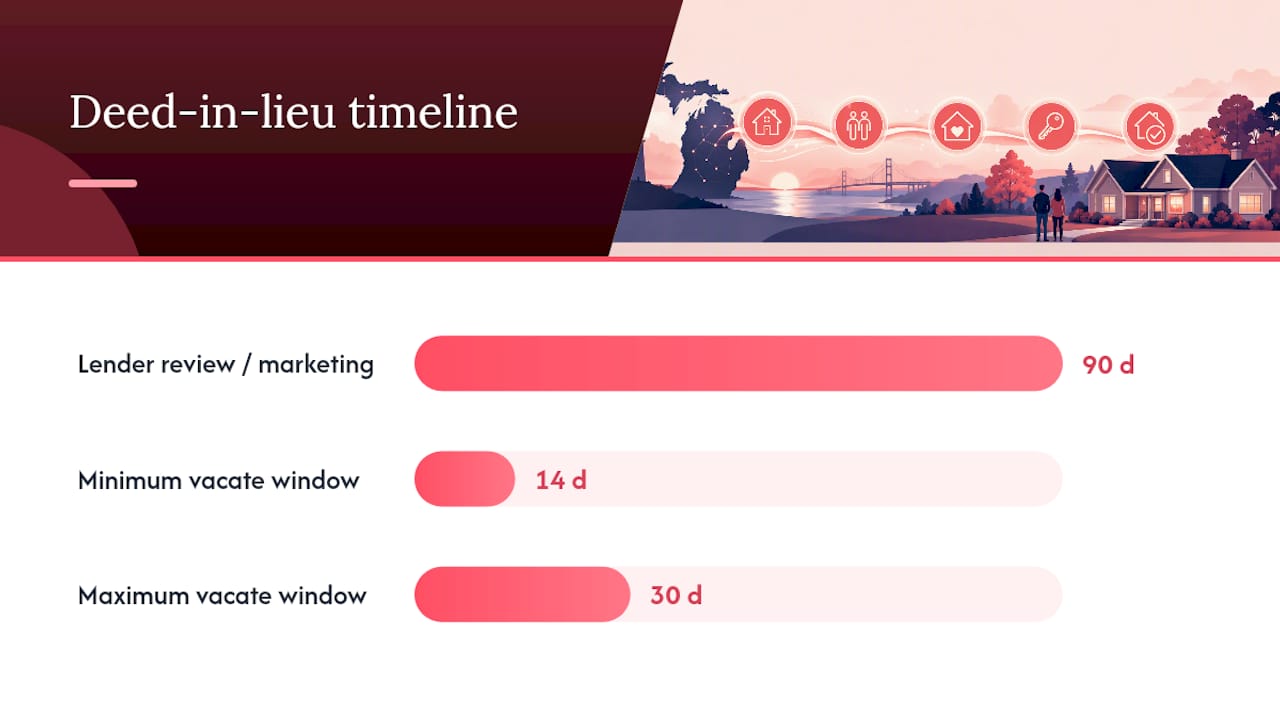
- The process typically takes around 90 days for review and marketing plus an additional 14 to 30 days to vacate, but delays are common due to title issues or lien complications.
- Without a written deficiency waiver, homeowners risk owing remaining debt or facing tax consequences from forgiven mortgage balances.
- Homeowners should document sale attempts, request written timelines, and consult HUD counselors or attorneys to improve their chances of approval and avoid common pitfalls.
- A deed in lieu generally impacts credit less severely than foreclosure and allows for a quicker, private resolution, but legal and tax obligations must be carefully managed.
Table of Contents
- What Is a Deed in Lieu of Foreclosure?
- How Does the Deed-in-Lieu Process Work in Michigan?
- What Do Lenders Require Before Approving a Deed in Lieu?
- Deed in Lieu vs. Foreclosure vs. Short Sale: Which Costs You Less?
- Will You Owe Taxes or Money After a Deed in Lieu?
- How to Start a Deed in Lieu Process in Michigan
- Why Do Lenders Reject Deed-in-Lieu Requests?
- Where Michigan Homeowners Can Get Local Help
- What Michigan Homeowners Get Wrong About Deed in Lieu
- Find Vetted Metro Detroit Providers Through Comparespot
- Sources
- FAQ
What Is a Deed in Lieu of Foreclosure?
A deed in lieu of foreclosure is a voluntary transfer of your home’s title to your mortgage lender, done specifically to satisfy the debt and sidestep a formal foreclosure filing. The lender has to agree to take the property; you cannot force this outcome unilaterally, no matter how motivated you are to walk away.
The differences from foreclosure show up almost immediately once you compare the two paths side by side.
- Voluntary vs. involuntary: Foreclosure is a court or lender-initiated action against you; a deed in lieu is a negotiated agreement you propose.
- Speed: Foreclosure in Michigan can drag on for months once redemption periods and sheriff’s sales are factored in, while a deed in lieu often closes in weeks once approved.
- Public exposure: Foreclosure sales are public auctions; a deed in lieu is a private transaction between you and the lender.
- Redemption rights: Michigan gives some foreclosed homeowners a post-sale redemption period, but that right generally disappears once you’ve voluntarily deeded the property away.
Homeowners who’ve already tried to sell and struck out often prefer this route simply because it ends the uncertainty faster and keeps the whole situation out of public auction listings.
How Does the Deed-in-Lieu Process Work in Michigan?
The process runs through your servicer’s loss mitigation department, not a courtroom, and it moves in a fairly predictable sequence once you know what to expect.
- Call loss mitigation directly. Ask specifically for a deed in lieu review, get the representative’s name, and follow up by email or letter so there’s a paper trail.
- Submit a hardship package. This usually includes a hardship letter, pay stubs, bank statements, and tax returns, along with proof of any attempt you made to sell the home.
- Wait for appraisal and title work. The lender orders an appraisal or broker price opinion and runs a title search to confirm you can convey clean ownership.
- Clear junior liens if any exist. Second mortgages, HELOCs, tax liens, or judgments can stall or kill the deal since the lender doesn’t want to inherit someone else’s claim.
- Negotiate the deficiency waiver and any relocation help. Some servicers offer cash-for-keys or relocation assistance to eligible borrowers who complete the transfer cleanly.
- Sign and vacate. Once approved, you sign closing paperwork and move out within the window the servicer sets.
Pro Tip: Ask your servicer to put the entire review timeline in writing at your first contact. Verbal promises about “a few weeks” tend to evaporate the moment your file gets reassigned to a different processor.
Lender timelines commonly reference roughly a 90-day marketing or review period before a deed in lieu gets approved, with an additional 14 to 30 days to vacate after signing, depending on the servicer. Michigan homeowners should treat that 90-day figure as a baseline, not a guarantee. Some files move faster; plenty stall because of title problems nobody caught early.
What Do Lenders Require Before Approving a Deed in Lieu?
Lenders evaluate deed-in-lieu requests through a fairly narrow lens: can they take this property without inheriting a legal mess, and is it worth more to them than pursuing foreclosure? Two factors decide most outcomes.
- Clear title matters more than almost anything else. Junior liens like HELOCs, unpaid property taxes, or court judgments attach to the property, and a lender accepting your deed would inherit those obligations. Most servicers won’t touch a file until those are resolved or released.
- Property condition and marketability count too. A home that’s been vacant for months, has deferred maintenance, or sits deeply underwater is less attractive to a lender that will eventually need to resell it.
- Prior sale attempts to strengthen your case. Lenders often want documentation that you tried to market the property before requesting a deed in lieu, since an arm’s-length sale usually nets them more than taking the deed directly.
Pro Tip: Pull your own title report before you even call your servicer. Finding a forgotten judgment lien now saves you weeks of back-and-forth later.
If you’re carrying a second mortgage or a tax lien and want to know whether selling outright might clear more of that debt, a short sale in Michigan sometimes handles junior liens more flexibly than a deed in lieu does.
Deed in Lieu vs. Foreclosure vs. Short Sale: Which Costs You Less?
Every one of these three paths ends your mortgage obligation eventually, but they get there through very different consequences for your credit, your wallet, and your timeline.
- Credit impact: All three typically hurt your credit score, but foreclosure tends to be the most damaging and the longest-lasting mark on your report; a deed in lieu or short sale often reports slightly less severely, though results vary by scoring model.
- Deficiency exposure: A written deficiency waiver in your deed-in-lieu agreement can eliminate the lender’s right to come after you for the remaining balance; without it, you can still owe money even after giving up the house. Foreclosure deficiency judgments follow similar rules but are pursued more aggressively in some cases.
- Proceeds: A short sale can occasionally put a little cash in your pocket if there’s any equity or if the lender approves a modest payout; a deed in lieu returns nothing to you since you’re transferring ownership outright.
- Speed and privacy: Foreclosure is public and slow; a deed in lieu is private and generally faster once approved; a short sale’s timeline depends entirely on finding a buyer.
If there’s any equity left in your home, MSU Extension recommends exploring a short sale before a deed in lieu, since selling on the open market can recover value that surrendering the deed simply forfeits.
Will You Owe Taxes or Money After a Deed in Lieu?
The IRS can treat forgiven mortgage debt as taxable income, and that catches a lot of Michigan homeowners off guard. If your lender cancels part of your loan balance as part of the deed-in-lieu agreement, you may receive a Form 1099-C reporting that forgiven amount as income for the year.
There are exclusions and insolvency rules that can reduce or eliminate that tax liability, but they depend on your specific financial situation. That’s not something to guess your way through.
- Request the deficiency waiver in writing as part of your closing package, not as a verbal assurance from a loss mitigation rep.
- Ask your servicer directly whether they intend to issue a 1099-C and for what amount.
- Consult a tax professional or a HUD-approved counselor before you sign, especially if you’re already financially stretched.
Skipping this step is how homeowners end up surprised the following spring by a tax bill they never budgeted for.
How to Start a Deed in Lieu Process in Michigan
Getting the ball rolling doesn’t require an attorney on day one, but it does require documentation from the very first phone call.
- Call your servicer’s loss mitigation line and ask for a deed-in-lieu review. Get the representative’s full name and a reference number for the call.
- Send a follow-up email or letter same-day confirming what was discussed, so you have a written record if the case gets reassigned.
- Build your hardship package. Include a hardship letter explaining what happened (job loss, medical bills, divorce), recent pay stubs, bank statements, and two years of tax returns if requested.
- Document any sale attempts. If your servicer requires a 90-day marketing period first, keep listing agreements, showing logs, and any offers you received or rejected.
- Ask directly about the deficiency waiver and cash-for-keys. Don’t assume either is automatic; put both questions in writing and request written answers.
- Request the full timeline in writing. Get expected review dates, appraisal timing, and the vacate window before you commit to anything.
- Prepare a backup plan. If the lender denies your request, know your next move already: short sale, a call to a HUD-approved housing counselor, or a consultation with a real estate attorney.
Pro Tip: Keep every piece of correspondence, even texts, in one folder from day one. If your case gets denied and you need to appeal or pivot to a short sale, that paper trail becomes your strongest evidence that you acted in good faith.
Why Do Lenders Reject Deed-in-Lieu Requests?
Denials aren’t random, and most trace back to one of three issues. Junior liens top the list. A HELOC, a tax lien, or an unresolved judgment means the lender would inherit a legal claim they don’t want, so they’ll ask you to clear it first or they’ll simply decline.
Poor property condition is the second common reason. A home with significant deferred maintenance or storm damage costs the lender money to resell, which makes foreclosure look more attractive to them by comparison.
- If you’re denied, ask for the reason in writing. That documentation matters if you appeal or move toward another option.
- A short sale may still work even when a deed in lieu doesn’t, particularly if junior lien holders are willing to negotiate a partial release.
- A HUD-approved housing counselor can help you interpret the denial and figure out whether bankruptcy counseling or a loan modification makes more sense next.
Where Michigan Homeowners Can Get Local Help
Before you sign anything, talk to a professional who isn’t employed by your lender. HUD-approved housing counselors offer free or low-cost guidance and can review your hardship package before you submit it, which catches mistakes that cost homeowners weeks of delay.
- Search HUD’s counselor directory by ZIP code to find someone local to Wayne, Oakland, or Macomb County.
- MSU Extension’s foreclosure resources walk Michigan homeowners through alternatives in plain language, without the sales pressure a servicer’s own team might apply.
- If your next step involves selling instead of deeding the property away, Comparespot’s local rankings of Metro Detroit real estate agents and cash buyers can help you compare vetted providers before signing with anyone.
What Michigan Homeowners Get Wrong About Deed in Lieu
The biggest mistake I see homeowners make isn’t choosing the wrong option. It’s skipping the written deficiency waiver because the process already feels exhausting and they just want it over. That single missing clause is the difference between walking away clean and getting a collections call eighteen months later for a balance you thought was gone.
Act early, get the title checked before you call anyone, and loop in a HUD counselor or attorney before you sign, not after. Comparespot’s Metro Detroit guides exist because homeowners in this exact situation deserve straight answers, not a sales pitch dressed up as advice.
— Bryan
Find Vetted Metro Detroit Providers Through Comparespot
If a deed in lieu falls through, or a short sale looks like the better financial move, the next question is simple: who do you actually trust to handle it? Comparespot is the alternative to guessing your way through Google reviews. Every provider on our lists gets ranked through independent research and customer sentiment, not paid placement, so you’re not gambling on a stranger with your biggest asset.

Whether you need a real estate agent in Metro Detroit to run a short sale, a cash home buyer in Royal Oak for a fast, no-repairs sale, or a mortgage lender in Metro Detroit to explore refinancing before things get worse, Comparespot’s rankings cover Wayne, Oakland, and Macomb counties with current, editorially researched lists. Visit Comparespot’s local rankings to compare your options and take the next step with a provider that’s actually earned it.
This article is general information, not a substitute for advice from a qualified financial advisor. Consult a qualified financial professional about your own circumstances before acting on anything here.
Sources
- What is a deed-in-lieu of foreclosure? | Consumer Financial Protection Bureau
- Deed in lieu of foreclosure information | Bank of America
- Freddie Mac — standard deed in lieu program notes
- HUD housing counseling
- IRS Topic No. 431 — Cancellation of Debt
FAQ
What Are the Disadvantages of a Deed in Lieu?
You give up any remaining equity with nothing returned to you, your credit still takes a hit, and you can still owe taxes on forgiven debt or face a deficiency claim if you don’t secure a written waiver first.
How Long Does a Deed in Lieu Take in Michigan?
Most lenders reference a roughly 90-day review or marketing period, followed by 14 to 30 days to vacate after signing, though title issues or junior liens can extend that timeline significantly.
Will I Owe Money After a Deed in Lieu of Foreclosure?
You could, unless your agreement includes a written deficiency waiver; without one, the lender can still pursue you for the remaining balance, and forgiven debt may also trigger a taxable Form 1099-C.
How Do I Start a Deed in Lieu Process?
Call your servicer’s loss mitigation department, request a deed-in-lieu review, and follow up in writing with a hardship letter and financial documentation while asking specifically about the deficiency waiver terms.
Does a Deed in Lieu Affect Bankruptcy or Getting a New Mortgage Later?
A deed in lieu typically doesn’t block bankruptcy filing if your finances still require it, and most conventional loan programs require a waiting period of about two to four years afterward before you qualify for a new mortgage, similar to post-foreclosure waiting periods.