

A clean Michigan cash sale can close in as little as 7 days, with most deals landing somewhere between 7 and 14 days once you account for basic paperwork. The one thing that can blow up that window is title work. If a lien, a probate filing, or an old ownership dispute surfaces during the title search, expect a significantly longer timeline instead. Funds typically land in the seller’s account the same day or the next business day, sent by wire once the deed records, depending on bank cutoff times and closing day.
TL;DR:
- Title issues such as liens or ownership disputes can delay a Michigan cash closing by several weeks if not identified early during the title search.
- Most cash deals close within 7 to 14 days if both parties are fully prepared with all necessary documents and with no title complications, but delays are common in probate or lien situations.
- Buyers need verified proof of funds and clear wiring instructions beforehand, while sellers should have payoff statements and proper ID ready to avoid avoidable delays.
- A genuine cash buyer should be able to answer questions about their closing timeline, produce proof of funds immediately, and specify the title company handling the deal.
- Closing funds usually wire within the same or next business day after recording, but weekends, bank cutoffs, or delays in recording can extend that window.
Table of Contents
- Cash Closing Timeline in Michigan: Day-by-Day Breakdown
- What Sellers and Buyers Should Prep for a Fast Close
- What Causes Cash Closing Delays in Michigan?
- Michigan Transfer Tax, Recording, and When Sellers Get Paid
- Is a ‘Fast Cash Closing’ Actually Legit? Questions to Ask
- Why Comparespot’s Metro Detroit Research Matters Here
- Speed vs. Price: What Actually Matters More
- Find Vetted Cash Buyers Who Actually Close on Time
- Sources
- FAQ
Cash Closing Timeline in Michigan: Day-by-Day Breakdown
A cash closing moves fast because it skips two of the slowest parts of a financed sale: appraisal and lender underwriting. Once a buyer with real money in hand and a seller agree on terms, everything else is administrative. Here’s roughly how it plays out.
- Day 0 to 1: Offer accepted, funds verified. The buyer signs the purchase agreement, hands over proof of funds (a bank letter or verified account statement), and both sides pick a closing agent, whether that’s a title company, a real estate attorney, or an escrow officer.
- Days 2 to 5: Title search and payoff confirmation. This is the real bottleneck. A title search in Michigan commonly takes 3 to 5 business days, during which the title company checks for liens, unpaid taxes, or ownership gaps. The seller’s mortgage payoff amount also gets confirmed here if there’s an existing loan to satisfy.
- Days 5 to 10: Walkthrough and paperwork prep; use helpful checklists from Real Estate Investor Insights by State | Mayday to stay organized throughout. The buyer schedules a final walkthrough, the closing agent draws up the deed and settlement statement, and both parties verify wiring instructions directly with the title company by phone, not just by email.
- Closing day: Signing and disbursement. The actual signing meeting runs about 1.5 to 2 hours. Once documents record with the county, funds usually wire out same day or the next business day, depending on the buyer’s bank cutoff time.
Inspections can still add a few days if the buyer orders one, since most inspectors need a week’s notice to book, even though a cash sale skips the lender-required appraisal and underwriting steps that slow down financed deals.
What Sellers and Buyers Should Prep for a Fast Close
The fastest closings happen when both sides show up ready instead of scrambling after the fact. Here’s what each party should have lined up before the clock starts.
Sellers should gather:
- Mortgage payoff statement (or confirmation the home is owned free and clear)
- Current deed copy and most recent property tax bills
- Government ID and a decision on payout method (wire is standard)
Buyers should gather:
- Verifiable proof of funds, not a screenshot, but a bank letter or verified statement
- Government ID and a signed, complete purchase agreement
- Earnest money ready to deposit with the title company or escrow agent
Both parties should:
- Confirm the closing agent and get their contact information in writing
- Call the title company directly to verify wiring instructions before sending any money
- Coordinate access for the final walkthrough so nobody’s waiting on a lockbox code
Pro Tip: Ask the title company for a preliminary title report within the first day or two, not after the formal search wraps. A quick look often flags red flags, like an old lien or a name discrepancy, early enough to fix without blowing the timeline.
What Causes Cash Closing Delays in Michigan?
Most delays trace back to one of four sources, and nearly all of them are fixable if you catch them early.
- Title defects and liens. An unpaid contractor bill or an old judgment against a previous owner can freeze a closing until it’s resolved. Running a title check in the first 48 hours instead of waiting for the full 5-day search gives you time to clear it.
- Probate or multi-heir ownership. If the property passed through an estate, every heir may need to sign, or you’ll need documented power of attorney. Build in extra time here, and start gathering signatures before you even list.
- Seller-side unpreparedness. Missing payoff letters, misplaced deeds, or keys that aren’t ready on closing day are avoidable delays that cost real days.
- Buyer red flags. A buyer who can’t produce authenticated proof of funds or gets vague about escrow instructions is worth pausing on, regardless of how fast they claim to move.
Michigan Transfer Tax, Recording, and When Sellers Get Paid
Michigan charges a combined state and county transfer tax that works out to roughly $8.60 per $1,000 of the sale price. In most Michigan deals, the seller pays this tax, though it’s technically negotiable and should be spelled out in the purchase agreement.
- After signing, the deed gets recorded with the county Register of Deeds, and processing speed varies by county, so check locally if you’re on a tight schedule.
- Property taxes are typically paid in advance in Michigan and prorated between buyer and seller at closing.
- Funds are usually wired same day, but a Friday closing or a bank with an early cutoff time can push arrival to the next business day.
For a full breakdown of what sellers typically net after fees, Comparespot’s guide to Michigan seller closing costs and its companion piece on Michigan transfer tax walk through the math county by county.
Is a ‘Fast Cash Closing’ Actually Legit? Questions to Ask
A genuine cash buyer should be able to answer these without hesitation. If they can’t, treat it as a warning sign.
- Why this particular closing date? A buyer who says “cash” but proposes 30-plus days with no clear reason may be using the cash label as leverage to negotiate a lower price, not because they actually need that long.
- Can they produce authenticated proof of funds and name a real closing agent, not just a phone number?
- Does the contract spell out who pays transfer taxes and closing costs, matching what was verbally agreed?
- Which title company or attorney is handling the file, and how fast do they expect to clear title and record the deed?
Why Comparespot’s Metro Detroit Research Matters Here
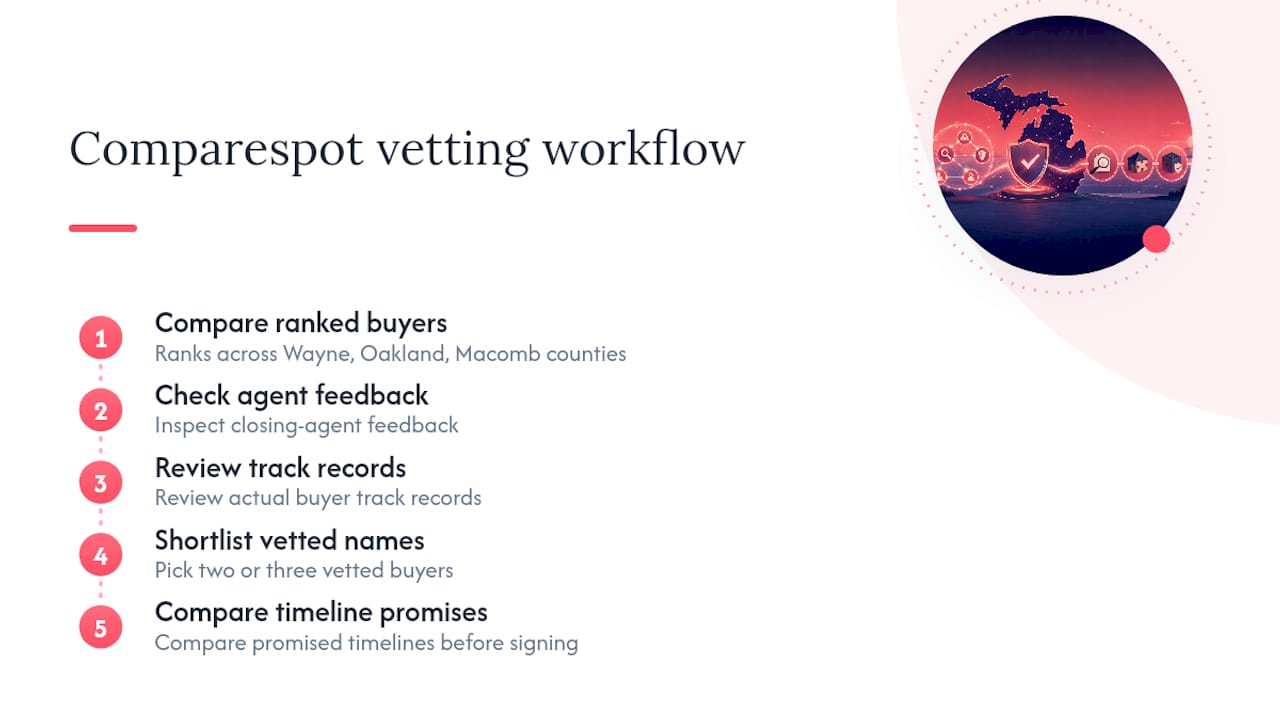
This platform ranks cash home buyers across Wayne, Oakland, and Macomb counties using editorial research and customer sentiment, not paid placement. That means checking closing-agent feedback and reviewing actual track records before a buyer earns a spot on a list. Sellers can pull two or three vetted names from rankings and compare their timeline promises side by side before signing anything.
Speed vs. Price: What Actually Matters More
If you’re facing foreclosure, relocating fast, or settling an estate, a vetted cash buyer with a realistic 7 to 14 day window usually beats holding out for top dollar. If maximizing proceeds matters more than speed, listing traditionally probably serves you better. The smart middle ground: collect a few cash offers, then compare both the net proceeds and the promised timeline before deciding.
— Bryan
Find Vetted Cash Buyers Who Actually Close on Time
This platform offers an alternative to guessing which cash buyer will actually hit their promised date. Instead of taking one company’s word for a “7-day close,” Metro Detroit rankings compare buyers by city and county using real closing-agent feedback and customer sentiment, not marketing copy.

Each ranking lays out the buyer’s typical timeline claims, how they’ve performed on past closings, and what documentation they’ll ask for upfront. Pull two or three names from a list, request proof of funds and recent closing references from each, and confirm their closing agent details before signing anything. If you’re weighing a cash sale against listing traditionally, Comparespot’s Metro Detroit real estate agent rankings cover that path too. For sellers ready to move now, start with the full list of vetted cash home buyers in Metro Detroit and compare offers before you commit to a date.
Sources
For rate details and payer responsibility, check the Michigan Department of Treasury’s transfer tax page. For federal disclosure timing on financed deals, the CFPB’s closing costs guide covers the 3-day rule. Confirm county-specific recording times directly with your local Register of Deeds.
- Michigan state guidance (state pages consolidated)
- Forbes Advisor — what a cash offer means and timeline expectations
FAQ
How quickly can you close on a house with cash in Michigan?
A clean cash sale in Michigan can close in about 7 to 14 days, with 7 days being achievable when the title is clear and both parties are prepared. Complications like liens or probate issues can stretch that to 30 to 60 days.
How long does it take to close on a house in Michigan overall?
Financed sales in Michigan typically take about 30 days because of appraisal and lender underwriting, while cash sales skip those steps entirely. The main variable in a cash deal is the title search, which usually runs 3 to 5 business days.
What is the 3-3-3 rule in real estate?
There’s no single, universally recognized “3-3-3 rule” in Michigan real estate law or industry standards. If you’ve seen it referenced, it’s not a formal regulatory framework, so treat any specific claim about it with caution and confirm directly with your closing agent.
How long does it take to get cash after closing?
Funds are typically wired same day or the next business day after closing, depending on when the deed records and your bank’s wire cutoff time. Friday closings or those near a bank’s daily cutoff often mean the money lands the following business day.
Who pays the transfer tax in a Michigan cash sale?
The seller typically pays Michigan’s combined transfer tax, which works out to roughly $8.60 per $1,000 of the sale price, though this is negotiable and should be specified in the purchase agreement.