

Title company fees cover three jobs: searching public records for ownership problems, insuring against anything the search misses, and handling the paperwork that legally transfers the property. Expect a combined bill in the range of about 0.67% of your purchase price on average, with settlement fees alone often running $300 to $800. The exact number shifts based on your state, your home’s price, and whether you buy optional owner’s coverage.
TL;DR:
- Title search costs typically range from a few hundred dollars to cover the review of land records and unpaid liens, depending on location and property complexity.
- Settlement fees usually fall between $300 and $800, covering coordination, signatures, and recording of documents, with exact figures varying by provider and state.
- Buying both owner’s and lender’s title insurance policies together often provides discounts, but skipping the owner’s coverage could leave you vulnerable to post-closing title issues.
- On a $400,000 home, total title and settlement costs usually hit around $2,680 based on the industry median of 0.67%, but actual prices depend on local rules and coverage choices.
- In promulgated-rate states like Florida, the insurance premium is fixed by regulators, but settlement and other fees are still negotiable and can be reduced through shopping around.
Table of Contents
- What Do Title Company Fees Actually Cover?
- Owner’s vs. Lender’s Title Insurance: What’s the Real Difference?
- Where Do Title Fees Show Up on Your Closing Disclosure?
- Who Pays Title Fees, and Does It Depend on Where You Live?
- How Can You Actually Lower Your Title Company Fees?
- What Would Title Fees Look Like on a $400,000 Home?
- Why Local Context Changes How You Should Read These Numbers
- Find a Local Pro Who Can Walk You Through Your Closing Numbers
- Where These Numbers Come From
- Sources
- FAQ
What Do Title Company Fees Actually Cover?
Every closing bundles several distinct services under the umbrella of “title fees,” and knowing which is which helps you spot where you can actually negotiate.
- Title search: A researcher digs through public land records, tracing ownership back decades to confirm the seller can legally transfer clear title and to catch old liens, unpaid taxes, or recording errors.
- Settlement or closing fee: This pays the closing agent (sometimes the title company, sometimes an attorney) for coordinating signatures, disbursing funds, and making sure the deed and mortgage get recorded correctly.
- Recording fees: A flat charge set by the county for filing the new deed and mortgage in public records, usually a small line item compared to insurance premiums.
- Attorney or abstract fees: In some states, a licensed attorney has to review title work or run the closing itself; in others, an abstract company simply compiles ownership history for a smaller flat rate.
- Lender’s title insurance premium: A one-time payment protecting the mortgage lender’s financial interest in the property.
- Owner’s title insurance premium: A one-time, optional payment protecting your equity if a title problem surfaces after closing.
Pricing formats vary by state and provider. Some charge flat fees for settlement services, others use tiered insurance premiums based on loan amount or purchase price, and a few present everything as one bundled percentage. On your disclosures, insurance premiums and the settlement fee usually appear as separate line items rather than one lump “title fee,” even though people talk about them that way.
Owner’s vs. Lender’s Title Insurance: What’s the Real Difference?
The lender’s policy protects the bank’s investment and is almost always mandatory if you’re financing the purchase. The owner’s policy protects your equity, and it’s optional, which is exactly why so many buyers skip it and later regret that decision if a title defect surfaces.
- Buying both at once typically triggers a simultaneous-issue discount, since the insurer is underwriting one risk file rather than two separate ones.
- Refinancing later often qualifies for a reissue rate on a prior owner’s policy, cutting the new premium significantly.
- Skipping owner’s coverage saves money upfront but leaves you personally exposed to forged documents, undisclosed heirs, or clerical errors the search missed.
Pro Tip: Ask your title company for a combined quote on both policies before deciding to skip owner’s coverage. The incremental cost is often surprisingly small once the lender’s premium is already being paid.
Where Do Title Fees Show Up on Your Closing Disclosure?
Title charges don’t hide in one spot. The Consumer Financial Protection Bureau requires lenders to itemize them across specific sections of the Loan Estimate and Closing Disclosure, using the same layout nationwide under the TRID rule.
- Section B (“Services You Cannot Shop For”) lists items your lender selects, like the lender’s title insurance premium if the lender requires a specific provider.
- Section C (“Services You Can Shop For”) is where title search, settlement fees, and often the owner’s policy appear, since you’re free to choose your own provider for these.
- Section H (“Other”) sometimes captures the optional owner’s title policy, labeled explicitly as “Title - Owner’s Title Policy (optional)” so you know it isn’t required.
The label matters. Anything in Section C is fair game for shopping around, and comparing providers there can meaningfully cut your closing costs. Rather than obsessing over each line, compare the bottom-line total from two or three title company quotes side by side, since companies itemize the same services differently and a line-by-line comparison can be misleading.
Who Pays Title Fees, and Does It Depend on Where You Live?
Custom, not law, usually decides who pays what. Buyers typically cover the lender’s title insurance premium since it protects their loan, while sellers often pay for the buyer’s owner’s policy as a goodwill gesture, though this flips in some markets entirely.
- Check your purchase contract, not just local custom. It’s the document that legally sets who pays.
- In promulgated-rate states like Texas, Florida, and New Mexico, regulators set the title insurance premium itself, so shopping providers won’t lower that specific charge.
- Settlement fees and other add ons in those same states can still vary by provider, so shopping still has value even where the premium is fixed.
How Can You Actually Lower Your Title Company Fees?
Shopping title services works, and the CFPB estimates comparing providers can save buyers real money on these closing costs. The savings show up in the settlement fee and sometimes the owner’s premium, since promulgated states fix the core insurance rate regardless of who you choose.
- Get itemized quotes from at least two or three title companies, not just the one your agent or lender suggests.
- Ask directly whether the settlement fee includes reasonable curative work or if that gets billed separately if problems surface.
- Confirm you’re getting the simultaneous-issue discount if you’re buying both policies together.
- Watch for red flags: a lender pushing one provider with no clear reason, vague add-on charges with no explanation, or any last-minute email changing wire instructions.
Pro Tip: Never wire closing funds based on an emailed instruction change, even if it looks legitimate. Call your title company directly using a number you already have on file to confirm before sending anything.
What Would Title Fees Look Like on a $400,000 Home?
Using the industry median of 0.67% of purchase price, a $400,000 homelands around $2,680 in combined title and settlement costs, though your actual number depends heavily on location and coverage choices.
Quick math: $400,000 × 0.67% ≈ $2,680 for combined title insurance and settlement services, before adding recording fees or attorney charges where applicable.
Buying owner’s and lender’s policies together at simultaneous-issue rates could pull that estimate down. In a promulgated-rate state, the insurance portion stays fixed regardless of shopping, though settlement fees can still move. Your Loan Estimate remains the most accurate source for your specific transaction, since it reflects actual quotes rather than a national average.
Why Local Context Changes How You Should Read These Numbers
National averages tell you what to expect broadly, but title customs and typical costs shift block by block within Metro Detroit’s Wayne, Oakland, and Macomb counties. Comparespot ranks local title-adjacent professionals, including real estate agents, using editorial research and customer-sentiment data rather than paid placements, which matters when you’re trying to figure out what’s actually normal in your market.
— Bryan
Find a Local Pro Who Can Walk You Through Your Closing Numbers
National title-fee averages only get you so far. What matters is knowing which local agents, lenders, or buyers can explain these costs clearly before you sign anything, and that is what well-crafted rankings aim to provide.
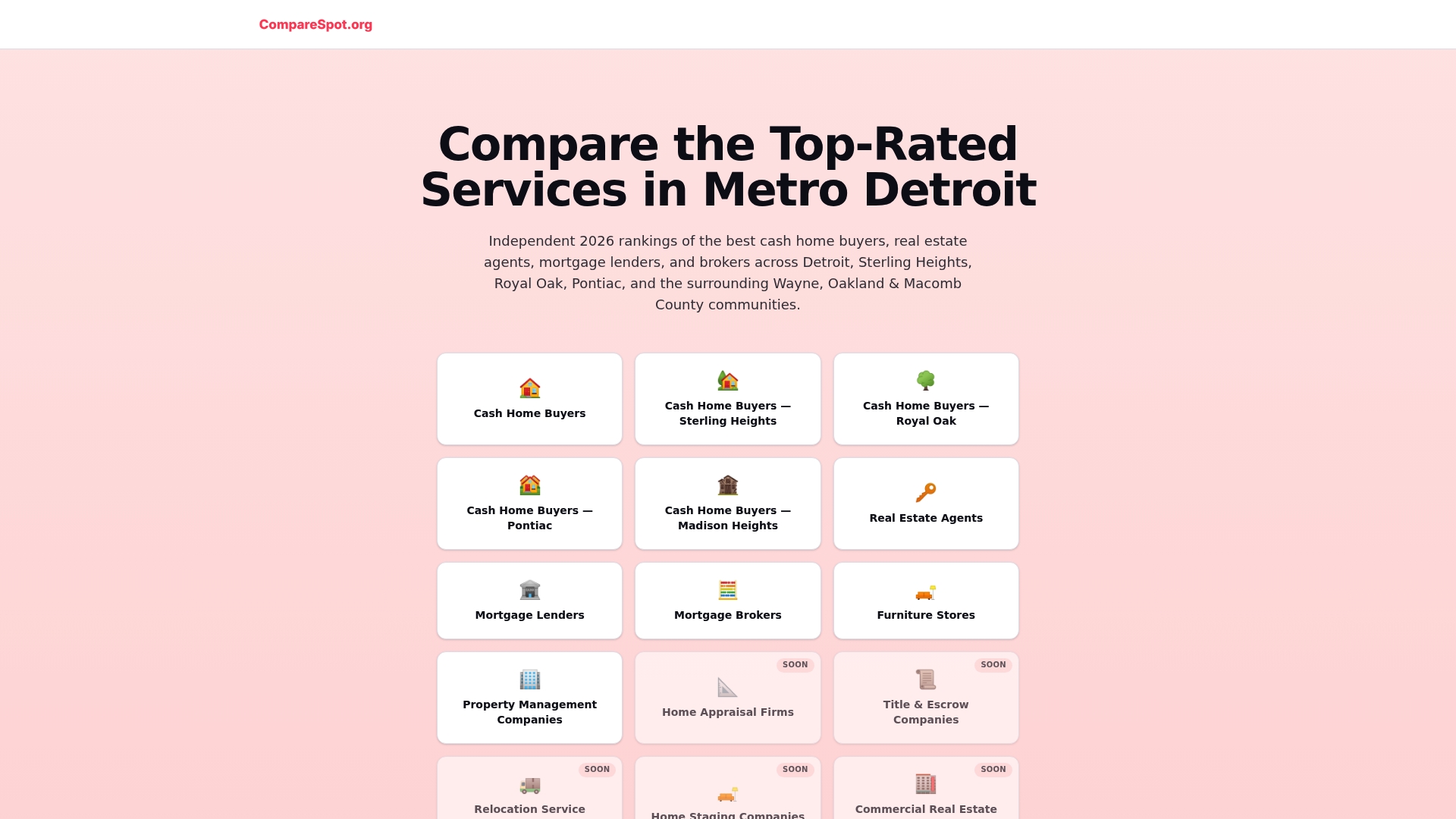
Every ranking on the site comes from independent research and customer-sentiment analysis, never paid placement, so the agents ranked for Metro Detroit got there on merit. If your situation involves financing, the mortgage lender rankings can point you toward lenders known for clear Loan Estimates and responsiveness when you’re shopping title services. Start by browsing the ranking closest to your situation, whether that’s an agent, lender, or buyer, and use it to find someone local who can walk through your specific closing numbers before you commit to a provider.
Where These Numbers Come From
The figures and rules in this guide come directly from federal disclosure requirements and industry cost studies, not marketing claims.
- The CFPB’s guide to shopping for title insurance explains which services you’re allowed to compare across providers.
- The CFPB’s TRID factsheet details exactly how title insurance must appear on your Loan Estimate and Closing Disclosure.
- ALTA’s cost study provides the 0.67% median benchmark and breaks down where premium dollars actually go.
Sources
- Shop for title insurance and other closing services | Consumer Financial Protection Bureau
- Factsheet: TRID Title Insurance Disclosures — CFPB
- Understanding the Cost of Title Insurance — ALTA
- What are title service fees? — Consumer Financial Protection Bureau
FAQ
How Much Is Title Insurance on a $400,000 House?
Using the industry median of 0.67% of purchase price, combined title insurance and settlement costs on a $400,000 home run around $2,680. Your actual cost depends on whether you’re buying owner’s coverage, your state’s rate rules, and any simultaneous-issue discounts you qualify for.
Who Pays Title Fees at Closing in Florida?
Florida is a promulgated-rate state, meaning regulators fix the title insurance premium regardless of which company you choose. Who pays the owner’s versus lender’s policy still comes down to local custom and what your purchase contract specifies, and that split varies by county.
What Is the Closing Cost on a $400,000 House?
Closing costs on a $400,000 home typically include title fees, lender fees, recording charges, and prepaid items like taxes and insurance, with title and settlement services alone averaging around $2,680 based on the 0.67% median. The full closing cost total usually lands higher once loan origination and prepaid escrow items are added in.
What Percentage Does a Title Company Take?
Title companies don’t take a flat cut of the sale price; they charge for specific services like the title search, settlement fee, and insurance premiums. Combined, these typically land around 0.67% of the purchase price on average, though promulgated-rate states and provider choice both affect the final number.
Is It Worth Getting an Owner’s Title Insurance Policy?
Most closing experts recommend it even though lenders don’t require it, since it’s the only policy that protects your personal equity in the home. Buying it alongside the required lender’s policy often qualifies for a simultaneous-issue discount, which narrows the cost gap considerably.