
For most U.S. homeowners, hiring a listing agent produces a higher net sale price than selling FSBO, even after paying commission. NAR data shows FSBO transactions account for a small share of home sales, and median FSBO prices tend to be lower than agent-assisted sale medians. The math often favors an agent in most open-market situations.
FSBO can still make sense in three specific cases:
- You already have a ready, willing buyer (a neighbor, family member, or colleague) and the deal is essentially done before listing.
- You have prior real estate selling experience and understand pricing, contracts, and disclosure law.
- Your property is straightforward and you have the time to manage showings, negotiations, and paperwork yourself.
Everyone else should read the cost comparison below before assuming the commission savings are real.
Key Takeaways
For most U.S. homeowners selling on the open market, hiring a listing agent produces higher net proceeds than FSBO, even after commission, because the typical FSBO price penalty of $50,000–$55,000 exceeds the listing-side commission saved.
| Point | Details |
|---|---|
| Agent usually nets more | The typical FSBO price penalty ($50,000–$55,000) exceeds the listing-side commission in most open-market sales. |
| FSBO savings are smaller than they look | Most FSBO sellers still pay a buyer-agent commission (~3%), cutting potential savings roughly in half. |
| FSBO suits specific situations | Known buyer, prior selling experience, or a straightforward property in high demand are the clearest FSBO green lights. |
| Legal review is non-negotiable for FSBO | An attorney for contract review ($500–$1,500) is the single highest-ROI safeguard for any FSBO seller. |
| Comparespot shortens agent selection | Comparespot’s Metro Detroit rankings cover Wayne, Oakland, and Macomb counties with independently researched, vetted agents. |
Table of Contents
- How do realtor and FSBO compare across what actually matters?
- What does a listing agent actually give you?
- What does selling FSBO actually look like?
- Do the numbers actually favor an agent after you run the math?
- When does FSBO make sense, and when should you hire an agent?
- How to sell FSBO without the mistakes that usually sink it
- What are your alternatives to a full-service agent?
- Why trust this guide: how Comparespot researches these rankings
- The verdict, from someone who has studied this market closely
- Comparespot helps you find the right Metro Detroit agent fast
- Sources
- FAQ
How do realtor and FSBO compare across what actually matters?
| Dimension | With a Listing Agent | FSBO |
|---|---|---|
| Net proceeds | Higher median sale price, minus 5–6% commission | Lower median sale price; saves listing-side commission only if no buyer-agent fee offered |
| Effort required | Low to moderate — agent handles pricing, marketing, showings, paperwork | High — seller manages every task |
| Time to close | Typically faster; MLS exposure drives more offers | Often longer on market |
| Legal/paperwork complexity | Agent and E&O insurance provide a safety net | Full seller responsibility; errors can kill deals |
| Marketing reach | Full MLS + portal syndication from day one | Limited unless flat-fee MLS is used |
| Negotiation power | Agent brings comparable sales data and experience | Seller negotiates directly, often at a disadvantage |
| Out-of-pocket costs | Usually zero upfront; commission paid at closing | Flat-fee MLS, photography, legal review, staging |
Industry analyses report an average FSBO price penalty in the range of $50,000–$55,000 compared with agent-assisted sales — a gap that typically exceeds the listing-side commission saved.
What does a listing agent actually give you?
The core value of hiring an agent is a higher likely sale price combined with a delegated workflow you do not have to manage yourself. That combination is why a large majority of sellers use an agent.
Concrete pros:
- CMA-based pricing. Agents pull recent comparable sales and active competition to price your home where it attracts offers without leaving money behind.
- MLS exposure. A listing on the local MLS syndicates automatically to Zillow, Realtor.com, and Redfin within hours.
- Staging and photography coordination. Most agents either include professional photos or have a preferred vendor at a negotiated rate.
- Negotiation experience. Agents handle counteroffers, inspection repair requests, and appraisal gaps without the emotional charge a seller brings to the table.
- Errors-and-omissions (E&O) insurance. If a disclosure mistake surfaces post-closing, the agent’s E&O policy provides a layer of protection.
Cons worth knowing:
- Commission typically runs 5–6% of the sale price, split between listing and buyer agents.
- Service quality varies widely; a high-volume agent may hand your listing to a junior team member.
- You cede some control over showing schedules, price reductions, and negotiation tactics.
Pro Tip: Before signing a listing agreement, ask for a seller’s net sheet — a line-item estimate of your proceeds after commission, closing costs, and concessions. Any agent reluctant to produce one is a red flag.
What does selling FSBO actually look like?
The realistic tradeoff is a lower sale price and a much heavier workload.
Pros:
- Saves the listing-side commission if you attract a buyer without an agent.
- Full control over pricing, showing times, and negotiation terms.
- Works well for sales to known buyers where market exposure is unnecessary.
Cons:
- Median FSBO sale prices run significantly below agent-assisted medians.
- Most FSBO sellers often offer a buyer’s agent commission, which reduces the potential savings from avoiding a listing agent fee and to avoid buyer-agent bias, cutting the savings roughly in half.
- Heavier time commitment: pricing research, photography, showings, offer review, and paperwork all land on you.
- Legal and paperwork errors are a leading cause of failed FSBO deals, from missing disclosures to poorly written contingencies.
Hidden FSBO costs most sellers overlook: flat-fee MLS service ($100–$500), professional photography ($200–$500), attorney contract review ($500–$1,500), staging ($500–$2,000+), and the carrying costs of a longer time on market. These line items can easily total $3,000–$5,000 before you close.
Zillow research notes that many FSBO sellers underestimate the time and emotional cost, and a meaningful share eventually hire an agent mid-process after weeks of stalled showings.
Do the numbers actually favor an agent after you run the math?
Agent-assisted listings typically net more even after commissions in most open-market scenarios. Here is why.
Worked example on a $425,000 home:
- Agent-assisted: $425,000 sale price minus 5.5% total commission ($23,375) = ~$401,625 net
- FSBO (open market): $370,000–$375,000 likely sale price (applying the reported price gap) minus 3% buyer-agent commission ($11,100–$11,250) minus $3,500 in FSBO costs = ~$355,000–$360,000 net
The agent scenario nets significantly more in this example. ByOwner’s cost breakdown confirms that net savings shrink significantly once realistic FSBO line items are included.
Pro Tip: Run your own net sheet using both scenarios before deciding. Plug in your local median price gap (ask a local agent for recent FSBO vs. MLS comps) and your realistic FSBO costs. The answer often surprises sellers who assumed they’d pocket the full commission.
When does FSBO make sense, and when should you hire an agent?
The right choice comes down to your specific situation, not a universal rule.
FSBO is worth considering when:
- You have a ready buyer at an agreed price (friend, neighbor, coworker).
- You have prior experience selling real estate and understand disclosure law.
- Your home is in a high-demand area where it will sell fast regardless of marketing.
- You have 10–20 hours per week to invest in the process.
Hire an agent when:
- Your property is unique, high-value, or has features that require skilled marketing.
- You need to sell quickly and cannot afford weeks of stalled showings.
- You have no buyer network and need MLS exposure to generate offers.
- The legal complexity is high (estate sale, divorce, liens, or out-of-state ownership).
Quick scenario map:
- Retiring couple selling to their adult child: FSBO with an attorney makes sense. The buyer is known, the price is agreed, and the only real need is clean paperwork.
- First-time seller in a competitive Metro Detroit suburb: Agent strongly recommended. Pricing precision and MLS timing matter, and the price gap risk is real.
- Experienced investor selling a rental property: Hybrid approach (flat-fee MLS plus selective professional services) can work if the investor handles negotiations confidently.
How to sell FSBO without the mistakes that usually sink it
FSBO works when you follow a disciplined process. Skip steps and the legal and financial risks compound fast.
- Order a CMA or appraisal. Price it wrong and you either leave money behind or sit on the market. A licensed appraiser costs $300–$500 and removes guesswork.
- Decide on buyer-agent commission upfront. Offering 2.5–3% to buyer’s agents dramatically increases showings. Skipping it narrows your buyer pool to unrepresented buyers only.
- Hire a professional photographer. Listings with professional photos attract more online clicks. Budget $200–$500.
- List on the MLS via a flat-fee service. Flat-fee MLS providers restore the online visibility gap by syndicating your listing to Zillow, Realtor.com, and other portals for a fixed fee.
- Screen buyers before showings. Require proof of pre-approval or proof of funds before scheduling any showing.
- Use state-specific disclosure forms. Michigan has mandatory seller disclosure requirements. Download the current forms from the Michigan Department of Licensing and Regulatory Affairs or use a real estate attorney.
- Get attorney review on any written offer. DIY contract errors have led to failed deals and costly post-closing disputes. Budget $500–$1,500 for a transaction attorney.
- Handle inspection negotiations in writing. Every repair request, credit, or concession should be documented as a written addendum, not a verbal agreement.
- Run a closing checklist. Confirm title search, payoff statements, prorated taxes, and transfer documents at least two weeks before closing.
Pro Tip: For a practical FSBO checklist and common pitfalls, this step-by-step FSBO guide covers the full process from pricing to closing.
- State disclosure templates: available through your state’s real estate commission website.
- Flat-fee MLS services: search “flat-fee MLS [your state]” and compare what the fee includes (listing period, number of photos, offer forwarding).
What are your alternatives to a full-service agent?
Limited-service options can close the marketing exposure gap, but they shift negotiation and paperwork responsibility back to you.
Options and who they suit:
- Flat-fee MLS listing ($100–$500): Best for experienced sellers who want MLS exposure without full commission. You handle everything else.
- Limited-service or discount brokers (1–2% listing fee): A middle path. You get some agent support but pay less. Good for sellers comfortable with light guidance.
- iBuyers (Opendoor, Offerpad): Fast, certain close, but typically at below-market prices. Best for sellers who prioritize speed over maximum proceeds.
- Cash buyers: Similar to iBuyers. Useful for distressed properties, estate sales, or tight timelines. Comparespot’s Metro Detroit cash buyer rankings list vetted local options.
If you hire a full-service agent, ask these questions:
- What is your list-to-sale price ratio over the last 12 months?
- How many homes have you sold in this zip code in the past year?
- What does your marketing plan include beyond MLS?
- Will you provide a seller’s net sheet before I sign?
- Who handles my listing day-to-day — you or a team member?
- What is your average days-on-market for listings in this price range?
Red flags: vague marketing plans (“I’ll use social media”), refusal to share a recent net sheet, pressure to sign immediately, or no recent sales in your neighborhood.
Pro Tip: Comparespot’s Metro Detroit agent rankings are built on independent research and customer sentiment analysis — a faster starting point than cold-calling agents from yard signs.
Why trust this guide: how Comparespot researches these rankings
Comparespot uses independent editorial research, local rankings, and customer sentiment analysis focused on Metro Detroit homeowners in Wayne, Oakland, and Macomb counties. No provider pays for placement.
Comparespot’s editorial approach: rankings are built on transaction data, verified customer reviews, and market-specific performance metrics — not advertising relationships. Providers are evaluated on pricing accuracy, responsiveness, and documented outcomes for local sellers.
What that means for this guide:
- Data sources are cited and linked to primary industry research (NAR, Zillow, ListWithClever, ByOwner).
- Agent and service rankings reflect real Metro Detroit market conditions, not national averages.
- Editorial independence is maintained: Comparespot does not accept payment for rankings or editorial coverage.
For Metro Detroit homeowners, Comparespot’s local service rankings cover agents, cash buyers, mortgage lenders, and mortgage brokers in one place.
The verdict, from someone who has studied this market closely
Most Metro Detroit sellers I see considering FSBO are motivated by one thing: keeping the commission. That instinct is understandable. But the data is consistent — the price gap between FSBO and agent-assisted sales in open-market conditions usually exceeds the listing-side commission saved, sometimes by a wide margin. The sellers who do well with FSBO almost always have one of two things: a ready buyer already in hand, or genuine real estate experience. If you have neither, the checklist in this guide and a flat-fee MLS plus attorney combination is the minimum viable approach. And if you decide to hire an agent, use the interview questions above and check Comparespot’s Metro Detroit rankings before you sign anything.
Comparespot helps you find the right Metro Detroit agent fast
If you decide to hire an agent, finding a vetted local professional quickly matters more than most sellers realize. Comparespot ranks the 10 best real estate agents in Metro Detroit based on independent research and customer sentiment analysis across Wayne, Oakland, and Macomb counties — not paid placements.
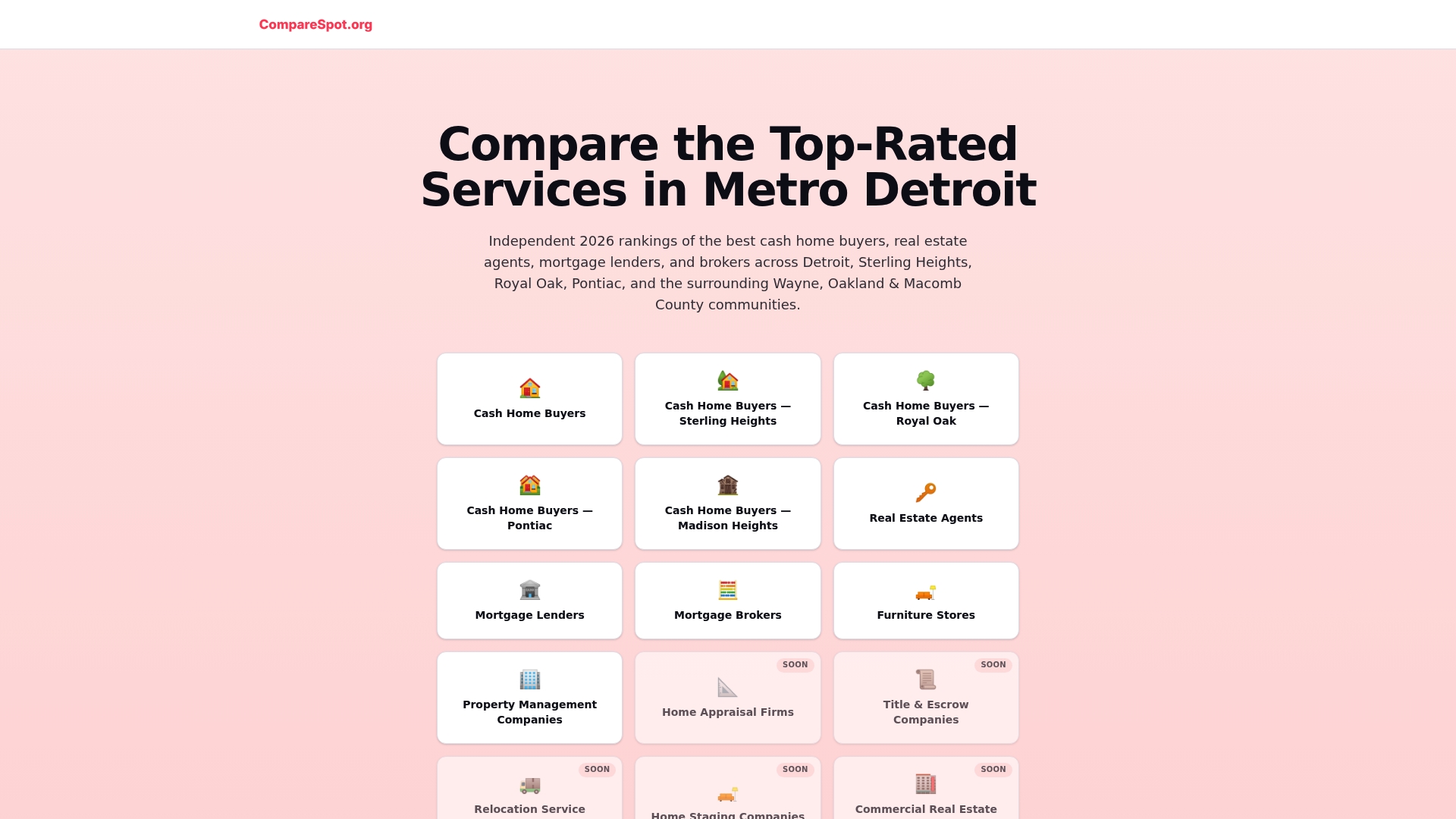
- Local rankings: agents ranked by verified performance data in your specific county.
- Editorial independence: no agent pays for a spot on the list.
- Coverage: Wayne, Oakland, and Macomb counties, with city-specific rankings.
- Also available: cash home buyer rankings for sellers who need a fast, certain close.
Check the current Metro Detroit agent rankings at Comparespot and compare your top candidates before signing a listing agreement.
Sources
- FSBOs Reach All-Time Low, More Sellers Rely on Agents
- FSBO vs Listing with an Agent: Costs, Pros, Cons & What You Really Get
FAQ
Does FSBO actually save money compared to using a realtor?
Rarely in open-market sales.
What are the biggest legal risks of selling FSBO?
Missing or incomplete seller disclosures and poorly written purchase contracts are the most common failure points. An attorney review of any written offer ($500–$1,500) is the most effective safeguard.
How long does FSBO take compared to selling with an agent?
FSBO listings typically sit on the market longer than agent-listed homes because they have less marketing reach and fewer buyer-agent showings. The exact gap varies by market and price point.
When does FSBO make the most sense?
FSBO works best when you already have a ready buyer at an agreed price, have prior real estate selling experience, or are selling a straightforward property in a high-demand area with time to manage the process yourself.
How can Comparespot help Metro Detroit sellers choose an agent?
Comparespot publishes independently researched rankings of the top real estate agents in Metro Detroit, covering Wayne, Oakland, and Macomb counties, based on verified performance data and customer sentiment — with no paid placements.