

Get preapproved before you shop. In Detroit, a verified preapproval sets your real buying power, makes your offer credible, and moves faster than a seller’s patience usually allows. It takes a lender checking your income, credit, and assets, not a quick online form. If you might qualify for the City of Detroit’s Down Payment Assistance program, with financial assistance available to eligible homebuyers, start there too, since your lender has to be on the City’s approved list before that money can help you.
TL;DR:
- Obtaining a verified preapproval in Detroit involves submitting detailed documentation, including income, assets, and credit verification, not just online forms.
- Preapproval letters specify the loan amount, type, interest rate, conditions, and expiration date, making offers more credible and competitive.
- Lenders typically verify employment, income history, credit score, and debt-to-income ratio, with a hard credit pull that carries a temporary score impact.
- The Detroit Down Payment Assistance program requires prequalification from an approved lender before applying, with household income at or below 80% of the area median income.
- Buyers should compare vetted local lenders experienced with Detroit’s DPA program, gather all necessary documents early, and act swiftly to secure the best chance in a competitive market.
Table of Contents
- Mortgage Preapproval in Detroit: What It Actually Means
- What Lenders Verify Before Issuing Your Letter
- Your Week-One Plan to Get Preapproved
- Detroit’s $25,000 Down Payment Assistance Program
- How Long Your Preapproval Lasts
- Where Detroit Buyers Trip Up
- Preapproval should be the first move, not an afterthought squeezed in after you’ve already fallen for a house. The guidance recommends that a buyer who shows up with a verified letter and a lender already confirmed on Detroit’s DPA participant list moves through the whole process faster than one who’s still guessing at their budget.
- Compare Detroit Mortgage Lenders Before You Apply
- Official Resources Worth Checking Before You Apply
- Sources
- FAQ
Mortgage Preapproval in Detroit: What It Actually Means
Preapproval and prequalification get used interchangeably, and that’s a mistake that costs buyers offers. Prequalification is a lender’s rough estimate based on numbers you report yourself, no paperwork required, no verification, no real weight behind it. Preapproval is a lender’s conditional commitment after actually checking your income, assets, credit, and employment.
That difference matters more in Detroit’s neighborhoods where inventory is tight and homes in areas like West Village or Corktown can draw multiple offers within days. A Detroit Bureau report on the local home loan process notes that agents routinely advise buyers to get preapproved before they even start touring houses, because sellers and their agents treat unverified numbers as noise.
A real preapproval letter typically spells out:
- The maximum loan amount you’re approved for, based on verified documents
- The loan type (conventional, FHA, VA, USDA) and estimated interest rate
- Conditions still outstanding, like a final appraisal or updated pay stub
- An expiration date, typically between 60 and 90 days from issue
Sellers and listing agents in Detroit read that letter as a signal of seriousness, not a courtesy document. A Bridge Detroit analysis of the local buying process points out that offers lacking a verified preapproval letter often get set aside in favor of competing offers that have one, even when the unverified offer is technically higher. If you want the fuller breakdown of how these two terms diverge, A detailed guide on preapproval versus prequalification walks through the mechanics side by side.
What Lenders Verify Before Issuing Your Letter
Every lender wants proof, not promises. Before a Detroit lender issues a preapproval letter, they’ll pull documentation that confirms you can actually afford the loan amount they’re putting their name behind.
Here’s what to have ready, roughly in the order lenders ask for it:
- Two years of W-2s or tax returns to confirm income history and stability
- Recent pay stubs, usually the last 30 days, showing current earnings
- Two to three months of bank statements for checking and savings accounts
- A government-issued photo ID and your Social Security number
- Documentation of other assets, like retirement accounts or investment statements, if you’re using them toward the down payment
- Gift letters, if any part of your down payment is coming from family
If you’re self-employed, expect the list to grow. Lenders typically want two full years of tax returns including all schedules, a profit and loss statement, and sometimes 1099s from clients. Income averaging across two years is standard, which can hurt you in a slow year and help you in a strong one.
Your credit score and debt to income ratio (DTI) drive the loan amount and rate you’ll see on that letter. Most conventional loans want a DTI under generally under 43%, although exceptions may apply with compensating factors. According to Rocket Mortgage’s overview of the preapproval process, lenders conduct a hard credit pull as part of verification, which is a firmer check than the soft pull used for prequalification estimates. That hard pull is exactly why preapproval carries more weight with sellers.
Pro Tip: Pull your own credit report before you contact a lender. Fixing a reporting error or paying down a revolving balance a few weeks ahead of applying can bump your score enough to change your rate.
Before signing with anyone, check their standing through resources like NMLS Consumer Access, which lists licensing status for mortgage companies and loan officers operating in Michigan.

Your Week-One Plan to Get Preapproved
Getting preapproved isn’t a weekend project, but it doesn’t have to eat a month either. Here’s the order that gets you a letter fastest without missing a step that slows you down later.
- Pull your credit reports from all three bureaus and dispute any errors immediately, since corrections can take weeks.
- Calculate a realistic budget using your actual take-home pay and DTI, not the maximum a lender might approve.
- Gather your documents from the checklist above before you contact anyone, so you’re not scrambling mid-application.
- Contact two to three lenders in Detroit and compare not just rates, but fees, turnaround time, and whether they participate in city-run assistance programs.
- Submit your application with a chosen lender and respond to any follow-up requests within a day or two to keep momentum.
- Receive your letter and share it with your real estate agent immediately, since it’s the document that makes your offers competitive.
When you’re shopping lenders, ask direct questions: What’s your average time from application to letter? What fees show up at closing that aren’t obvious upfront? Are you currently on the City of Detroit’s approved lender list for down payment assistance? That last question saves you from picking a lender who can’t actually help you access DPA funds later.
If you’re leaning toward a fast-moving market like Detroit’s east side or Jefferson Chalmers, consider asking your lender to send your file to underwriting for a fuller conditional approval before you’ve even found a house. It’s a stronger document than a standard preapproval letter and can tip a close call in your favor. A rundown of Detroit’s top mortgage lenders breaks down which local shops move fastest on this kind of request.
Detroit’s $25,000 Down Payment Assistance Program
The City of Detroit’s Down Payment Assistance program can put financial assistance toward your purchase, and Round 3 opened to assist new homebuyers as of March 11, 2026, according to the City’s own announcement.
a maximum DPA award is available to eligible Detroit homebuyers in the current round, funded through HUD’s CDBG program.
Eligibility isn’t automatic. The City generally requires:
- At least 12 months of Detroit residency before applying
- Household income at or below 80% of the area median income
- Completion of a HUD-approved homebuyer education course before closing
- A minimum borrower contribution toward the purchase, set at $1,000 under the program’s policy and procedure document
The sequencing trips up a lot of buyers. You cannot apply for DPA funds first and figure out financing later. The City’s own guidance states plainly that you need to be pre-qualified or preapproved by a lender on the City’s participant list before your DPA application even starts. Skip that step and you’ve wasted weeks.
The practical checklist looks like this: confirm your chosen lender is on the City’s approved participant list, complete your HUD-approved homebuyer education certificate, and gather income and asset documentation your DPA administrator will need alongside your loan file. Program administrators underwrite the subsidy separately from your mortgage, which means your Loan Estimate and Uniform Residential Loan Application from your lender feed directly into that review, coordinated with your lender’s clear to close timeline.
For a wider view of what else Michigan offers beyond the city program, A guide to first-time home buyer programs in Michigan covers the state-level options that can stack with or replace Detroit’s DPA depending on where you’re buying.
How Long Your Preapproval Lasts
Most preapproval letters expire in 60 to 90 days. Lenders set that window because your financial picture, and the market’s interest rates, can shift enough in that time to change what you can actually afford.
A few things can quietly invalidate your letter before it expires: opening a new credit card, financing a car, changing jobs, or making a large, undocumented deposit into your bank account. Lenders re-verify some of these details right before closing, and a surprise here can unwind months of work.
If your house search runs long, don’t let the letter lapse silently. Go back to your lender for a refresh once you’re within a couple of weeks of expiration, especially if your search is stretching past 60 days. For buyers competing on multiple offers, asking your lender to move you into full underwriting before you’re under contract turns a conditional letter into something closer to a guarantee, which matters more the longer your search stretches on.
Where Detroit Buyers Trip Up
The most common mistake is treating a prequalification estimate like a real preapproval when writing an offer. Sellers and agents can usually tell the difference, and it costs buyers the house.
Other frequent missteps:
- Submitting incomplete documentation, which restarts the verification clock
- Applying for Detroit’s DPA before confirming your lender is on the City’s participant list
- Ignoring Michigan’s property tax uncapping, which can reset a home’s taxable value higher after a sale and quietly inflate your monthly payment
That last one catches people off guard. A property’s taxable value in Michigan can jump significantly once it changes hands, according to local down payment assistance coverage, even if the sale price itself seems affordable on paper.
Pro Tip: Ask your lender directly whether their preapproval math accounts for post-sale tax uncapping and typical repair reserves on older Detroit housing stock. A number that ignores both can leave you house poor within a year.
Local lenders who work Detroit regularly tend to build these factors into their calculations automatically. Ones who don’t usually work primarily in suburban markets where uncapping is less of a shock.
Preapproval should be the first move, not an afterthought squeezed in after you’ve already fallen for a house. The guidance recommends that a buyer who shows up with a verified letter and a lender already confirmed on Detroit’s DPA participant list moves through the whole process faster than one who’s still guessing at their budget.
Independent editorial rankings exist to cut that guesswork down. Instead of cold-calling a dozen mortgage companies to find out which ones actually work Detroit’s DPA program, buyers can compare vetted local lenders in one place and skip straight to the ones worth calling first.
— Bryan
Compare Detroit Mortgage Lenders Before You Apply
Picking a lender by whoever answered the phone first is how buyers end up stuck with slow turnaround times or a company that’s never worked with Detroit’s DPA program. This is a research shortcut for that problem: independently ranked local lenders, evaluated on responsiveness, rates, and program experience, so you’re not starting from zero.
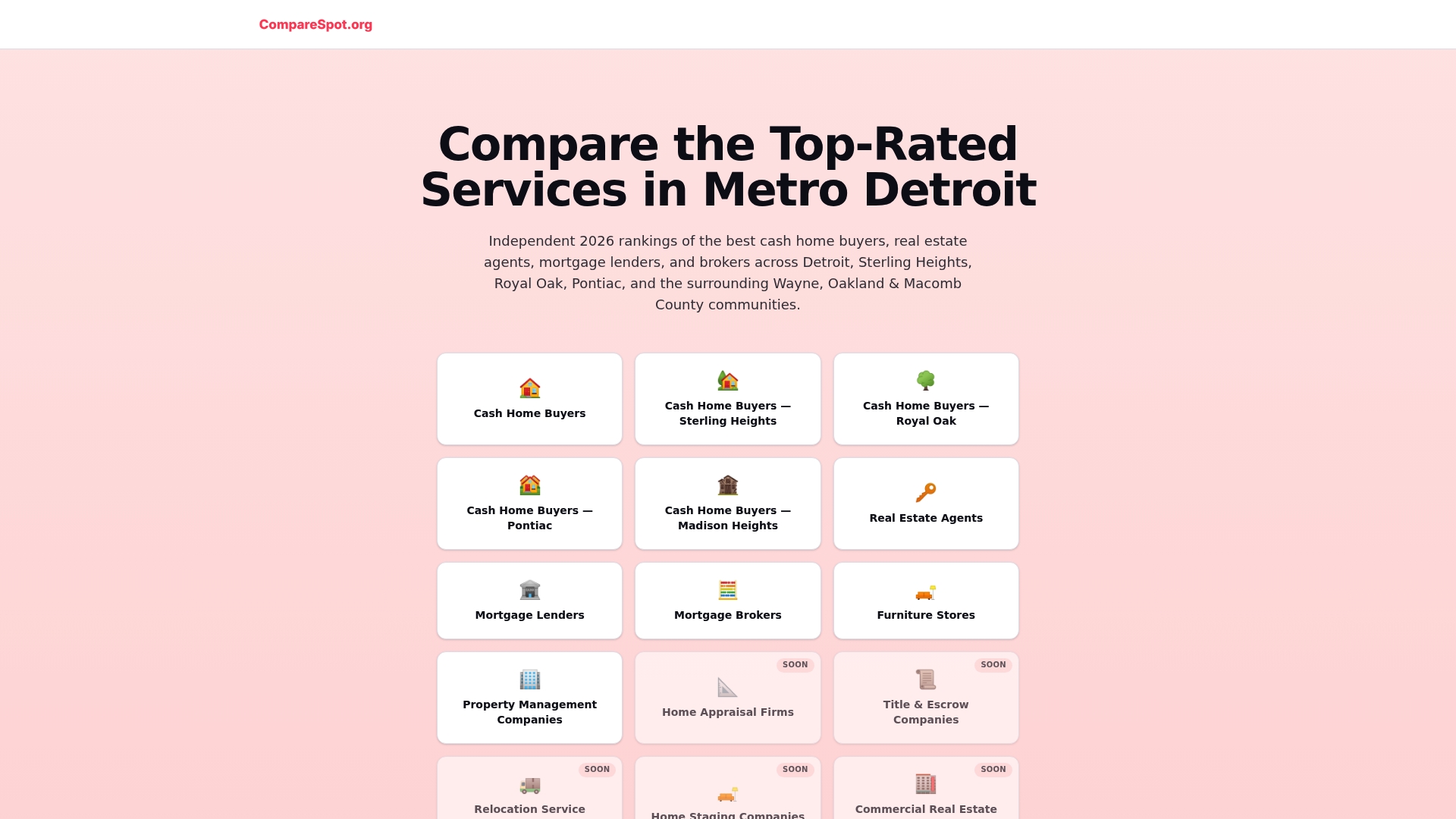
Before you apply anywhere, confirm two things: that the lender is genuinely active in Metro Detroit, and that they’re positioned to work with City programs if you’re pursuing the $25,000 DPA. A 10 Best Mortgage Lenders in Metro Detroit ranking lays out exactly that kind of detail, so you can shortlist two or three lenders instead of guessing. Once you’ve narrowed your list, reach out this week, ask about DPA participation directly, and get your documents moving. The buyers who close fastest in this market are the ones who made that call early.
Official Resources Worth Checking Before You Apply
Verify program rules directly rather than relying on secondhand summaries. The City of Detroit’s Down Payment Assistance program page covers eligibility and required steps, while the DPA policy and procedure document details underwriting and funding rules. For general preapproval mechanics that apply nationally, Rocket Mortgage’s guide is a solid plain-language reference.
This article is general information, not a substitute for advice from a qualified financial advisor. Consult a qualified financial professional about your own circumstances before acting on anything here.
Sources
- Mayor Sheffield partners launch Round 3 down payment assistance program as part of her home ownership plan | Detroit
- Mortgage preapproval: How to get preapproved | Rocket Mortgage
- Home loan approval: A simplified guide | The Detroit Bureau
FAQ
What Is the $25,000 Grant for Detroit Residents?
It’s the City of Detroit’s Down Payment Assistance program, which offers up to $25,000 toward a home purchase for eligible buyers who meet residency, income, and lender participation requirements, as detailed on the City’s site.
How Much Income Do You Need to Be Approved for a $400,000 Mortgage?
Get an exact figure from a Detroit lender who can run your actual numbers rather than a rule of thumb.
How Much Do You Need to Make to Afford a $300,000 House in Michigan?
The same DTI math applies here on a smaller scale, and your required income shifts based on your down payment size, property taxes (including any post-sale uncapping), and insurance costs specific to your Michigan neighborhood. A local lender can build all of that into a real preapproval number instead of a generic estimate.
How Do You Get Preapproved for a $200,000 Mortgage?
Gather your pay stubs, W-2s or tax returns, and bank statements, then apply with a lender who will verify your income, credit, and assets before issuing a conditional letter. The process typically takes a few days once your paperwork is complete and submitted.
Does Getting Preapproved Hurt My Credit Score?
A preapproval involves a hard credit pull, which can lower your score by a few points temporarily, but multiple mortgage inquiries within a short time window typically count as a single inquiry.