
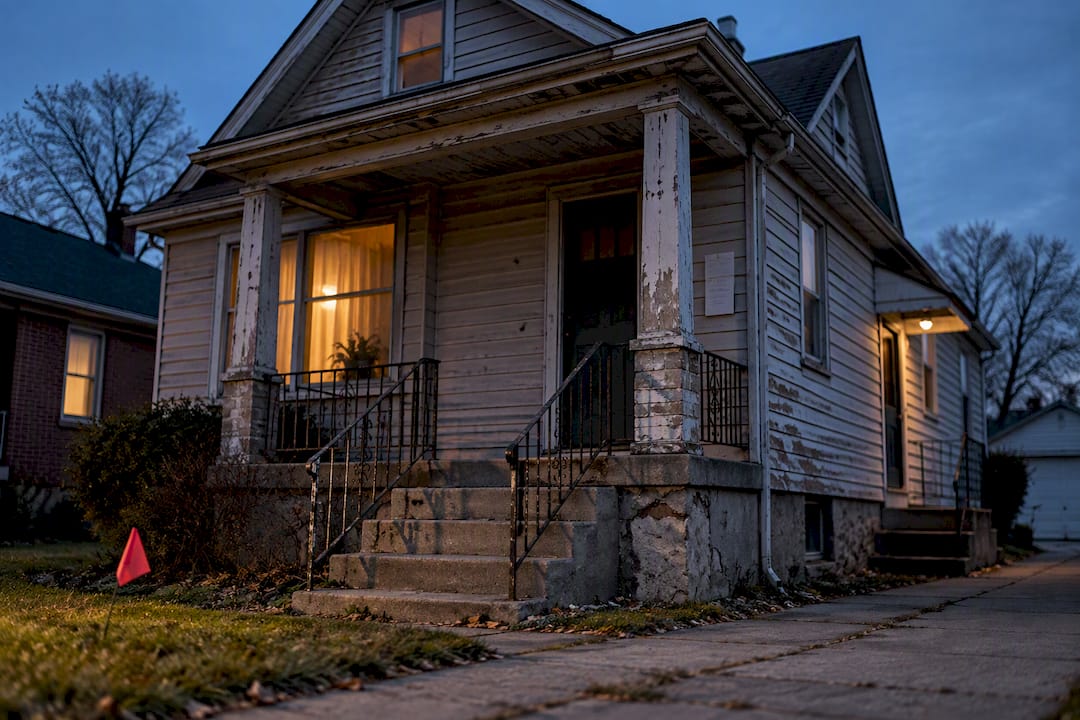
Yes, you can usually sell a Detroit house with code violations. What determines whether the sale closes cleanly is what shows up in a municipal-lien search and title commitment, not the violations themselves. Before you list or accept an offer, check three things: any open BSEED correction orders, any DAH blight tickets or judgments, and a title search for recorded liens. Start there, then call BSEED or DAH directly to confirm the current status of each open item.
TL;DR:
- Selling a Detroit house with open violations is possible as long as liens and judgments are disclosed and recorded, not necessarily repaired beforehand.
- The main city departments involved are BSEED for building condition issues and DAH for blight tickets, with different rules and processes for each.
- Property owners should verify the status of correction orders, blight tickets, liens, and permits before listing, to prevent surprises at closing.
- Repair options involve a lengthy process needing repairs, reinspection, and obtaining a Certificate of Compliance, which can take four to eight weeks or longer.
- Listing as-is with full disclosure or selling to a cash buyer are quicker alternatives, but both require careful documentation and understanding of unresolved liens or violations.
Table of Contents
- Code Violations House Sale Detroit: The Two City Offices You Need to Know
- Do You Have to Fix Violations Before You Can Sell in Detroit?
- How Violations Show Up at Closing: Title, Financing, and Liens
- Your Three Real Options for Selling a House With Violations
- Building Your Transaction Packet: A Step-by-Step Checklist
- What I’d Do First If I Were Selling
- Comparing Cash Buyers and Agents Before You Commit
- Sources
- FAQ
Code Violations House Sale Detroit: The Two City Offices You Need to Know
Detroit code problems fall into two buckets, run by two different departments, and mixing them up is how sellers get blindsided at closing. The Buildings, Safety Engineering and Environmental Department (BSEED) handles the physical condition of a property. The Department of Appeals & Hearings (DAH) handles the tickets and fines tied to unresolved violations.
Common BSEED-flagged issues on Detroit properties include:
- Unsafe or collapsing porches and steps
- Broken or boarded windows
- Overgrown lots and illegal dumping
- Unpermitted electrical, plumbing, or structural work
- Exposed wiring or other electrical hazards
- Missing or expired rental Certificates of Compliance
BSEED issues correction orders when it finds a violation, and it issues Certificates of Compliance once a property passes reinspection. DAH is where blight tickets live. Owners can look up ticket status, pay, or appeal through the Department of Appeals & Hearings. The fee schedule rewards early payment and penalizes late payment.
Occupancy status changes the rules significantly. Owner-occupied single-family homes are generally exempt from the rental Certificate of Compliance requirement, which applies to rental units and requires registration plus a 15-point inspection. If the property has ever been rented, or you are unsure how the City has it classified, confirm that status with BSEED before you list it.
Do You Have to Fix Violations Before You Can Sell in Detroit?
No Michigan law forces you to repair a house before selling it. What the law does require is honesty about what you know.
Michigan’s Seller Disclosure Act requires a signed disclosure form for most residential sales, and it’s built on your knowledge, not a repair mandate. You answer what you know, mark “unknown” where you genuinely don’t know, and you sign it before closing. Skip that step or deliver it late, and the buyer may have the right to walk away from the deal, even after the contract is signed.
That’s a meaningful distinction most sellers miss:
- Disclosure is about what you knew and when you knew it, not a warranty that the house meets code.
- You are not obligated to fix a leaking roof before selling. You are obligated to say you know about it if you do.
- Vague or evasive answers on the disclosure form create more legal exposure than an honest “unknown.”
Where things get forced rather than optional: rental properties still need a Certificate of Compliance, unpaid judgments recorded against the property can require payoff before a title company will close, and a vacate order on a dangerous structure can trigger extra legal steps entirely outside the normal sale process.
How Violations Show Up at Closing: Title, Financing, and Liens
This is where theory meets the settlement table. A house can look fine and still have a transaction that falls apart, because the problems that matter aren’t visible from the curb.
A municipal-lien search and title commitment will surface unpaid blight judgments, and Detroit’s enforcement approach means those judgments can attach to the property as recorded liens. That’s a direct hit to your proceeds if the City has pursued collection against a prior owner or against you.
Lenders complicate things further. A buyer using a mortgage runs into underwriting conditions tied to safety violations, vacate orders, or missing permits on prior work, and any of those can stall or kill a loan approval.
The realistic sequence, when repairs are involved, runs like this:
- BSEED inspects and issues a correction order listing specific defects.
- You complete the repairs and request reinspection.
- You pay any outstanding inspection or blight fees.
- BSEED reinspects and, if satisfied, issues a Certificate of Compliance.
- The title company closes once liens are paid or escrowed and the certificate (if required) is in hand.
Each of those steps can add a week or more, especially reinspection scheduling. Plan for four to eight weeks between an initial correction order and a clean certificate if the property needs real work, longer if permits for prior unpermitted construction need to be pulled retroactively.
Your Three Real Options for Selling a House With Violations
Every Detroit seller with open violations is choosing between three paths, and the right one depends on your timeline, your cash position, and how much risk you’re willing to hand off versus absorb yourself.
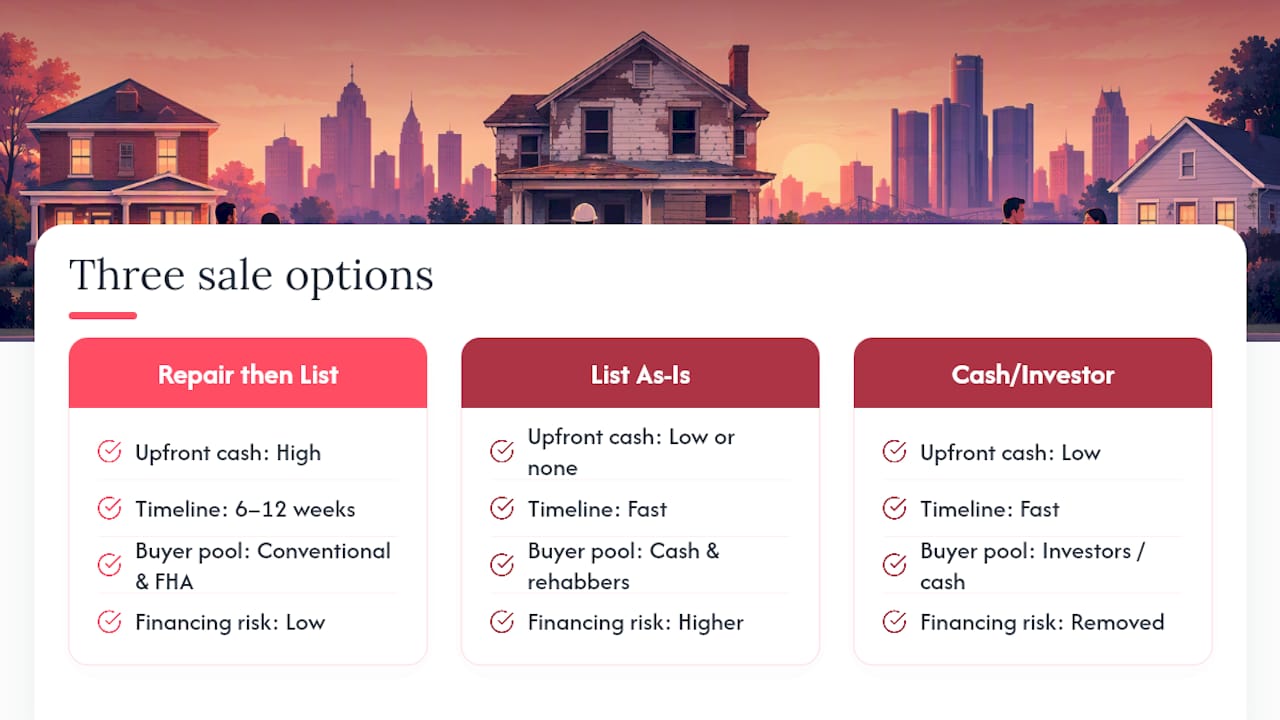
Option A: Repair, then list. This widens your buyer pool because conventional and FHA lenders can underwrite the loan without red flags. It costs the most upfront and takes the longest, but a documented Certificate of Compliance and closed correction orders let you price the house at market value instead of a discount. This route makes sense if you have six to twelve weeks of runway and enough cash to front repairs.
Option B: List as-is with full disclosure. You skip the repair timeline and price the house to reflect its condition. The contract needs specific language assigning who handles open tickets, who pays for outstanding liens, and whether funds get held in escrow for unresolved items. This works for sellers who want a normal listing process but can’t or won’t fund repairs, and it tends to attract cash buyers, rehabbers, and a smaller slice of conventional buyers willing to accept the risk. Resources on selling a house with code violations walk through how investors typically structure these deals.
Option C: Sell to a cash or investor buyer. Cash removes financing risk from the equation, but it does not remove your disclosure duty, and it does not erase recorded liens or judgments. A cash sale doesn’t automatically clear title problems; the buyer’s cash just means they aren’t relying on a lender’s approval. Get the buyer’s title commitment and proposed settlement statement in writing before you accept, so you know exactly what gets deducted from your proceeds. Guides on how to sell a house as-is cover the pricing and disclosure mechanics that apply regardless of buyer type.
Whichever path you’re leaning toward, build a short checklist before comparing offers: request a title commitment, request a proposed settlement statement, get written responsibility assignments for tickets and liens, and compare net proceeds after every payoff, not the headline offer price.
Pro Tip: A $150,000 headline offer with $18,000 in unresolved liens nets you less than a $135,000 offer with a clean title. Always ask for the settlement statement before comparing numbers.
Building Your Transaction Packet: A Step-by-Step Checklist
Buyers, agents, and title companies price uncertainty as risk, and they price it against you. A complete document packet turns unknowns into knowns, which usually means a better price and a faster close.
Assemble these before you market the property:
- Deed and government-issued ID confirming ownership.
- Current property tax and water/utility payment records.
- Every BSEED correction order issued on the property, resolved or open.
- Permits for any past renovation or repair work.
- DAH ticket numbers and hearing orders for any blight tickets.
- Proof of payment for tickets already resolved.
- Contractor invoices for completed repairs.
- Inspection reports, including any rental Certificate of Compliance if applicable.
Order the municipal-lien search and title commitment early, ideally before you set a listing price, so you aren’t discovering a $9,000 judgment the week of closing. If you’re working through BSEED’s correction process, follow the sequence exactly: fix the violation, request reinspection, pay the associated fees, and get the Certificate of Compliance in hand. Keep the written confirmation that the City closed the matter.
Pro Tip: Paying a blight ticket settles the fine, not the underlying condition. BSEED still needs to reinspect and close the correction order, or the violation stays live on the property’s record even after the money’s paid.
If you go the as-is or cash route, put the same discipline into the buyer’s paperwork. Require written terms on how they’ll handle any remaining liens, whether funds go into escrow, and who’s responsible for what after closing. A verbal “we’ll handle it” from a buyer means nothing at the settlement table.
What I’d Do First If I Were Selling
If I owned a Detroit property with open violations right now, my first two calls would be to BSEED for correction-order status and to a title company for a lien search. Everything else, repair versus as-is versus cash, is a math problem you can’t solve until you know what you’re actually working with.
Comparing vetted local cash buyers and agents through CompareSpot’s rankings can shorten the vetting stage considerably, since the legwork on reputation and track record is already done. Your checklist stays simple either way: pull records, get the title commitment, compare written offers on net proceeds, then close.
— Bryan
Comparing Cash Buyers and Agents Before You Commit
A local alternative to guessing which Detroit cash buyer or agent is actually reliable is to use independently researched rankings built specifically around Wayne, Oakland, and Macomb County market conditions, with no provider paying for a better spot on the list.
If you’re leaning toward a repair-and-list approach, the ranked Metro Detroit real estate agents can help you price around your violation history correctly. If you’re leaning cash, the Metro Detroit cash home buyer rankings narrow the field to providers with a track record worth checking further. Either way, still request the title commitment and written settlement terms yourself before signing anything. Start by browsing the current rankings at Comparespot and shortlist two or three providers to call this week.
FAQ
What Happens If Your House Is Not up to Code in Detroit?
BSEED issues a correction order listing the specific violations, and you’re required to fix them and request reinspection. If the issue also generated a blight ticket, DAH handles the fine separately, and unpaid tickets can turn into liens that follow the property, per the Department of Appeals & Hearings.
What Is the Penalty for a Detroit Blight Ticket Violation?
Penalties vary by the specific ordinance and ticket type, but DAH’s fee schedule includes a discount for early payment and an added penalty for late payment. Check your specific ticket number through the Department of Appeals & Hearings portal for the exact amount owed.
Do I Have to Get a Certificate of Compliance to Sell My House?
Only if the property is classified as a rental; owner-occupied single-family homes are generally exempt from that requirement, according to City of Detroit rental guidance. If you’ve ever rented the unit, confirm its current classification with BSEED before listing.
Can I Sell My Detroit House As-Is With Open Violations?
Yes, but full written disclosure is still required under Michigan law, and any recorded liens or judgments still need to be addressed at closing. A cash sale removes financing risk but does not erase title problems, so get a title commitment before accepting an offer.
Who Is Responsible for Abandoned or Vacant Detroit Properties With Violations?
Ownership responsibility stays with whoever holds title, even on a vacant or distressed property, and the City’s enforcement strategy specifically targets unresolved violations on vacant buildings. If you’ve inherited or acquired a vacant property, confirm your name is correctly recorded and check for open correction orders before doing anything else.